

Big, Loud and Muscular: Stephen Perkins’ Return to ’70s Rock
 On 07th Sep 2026
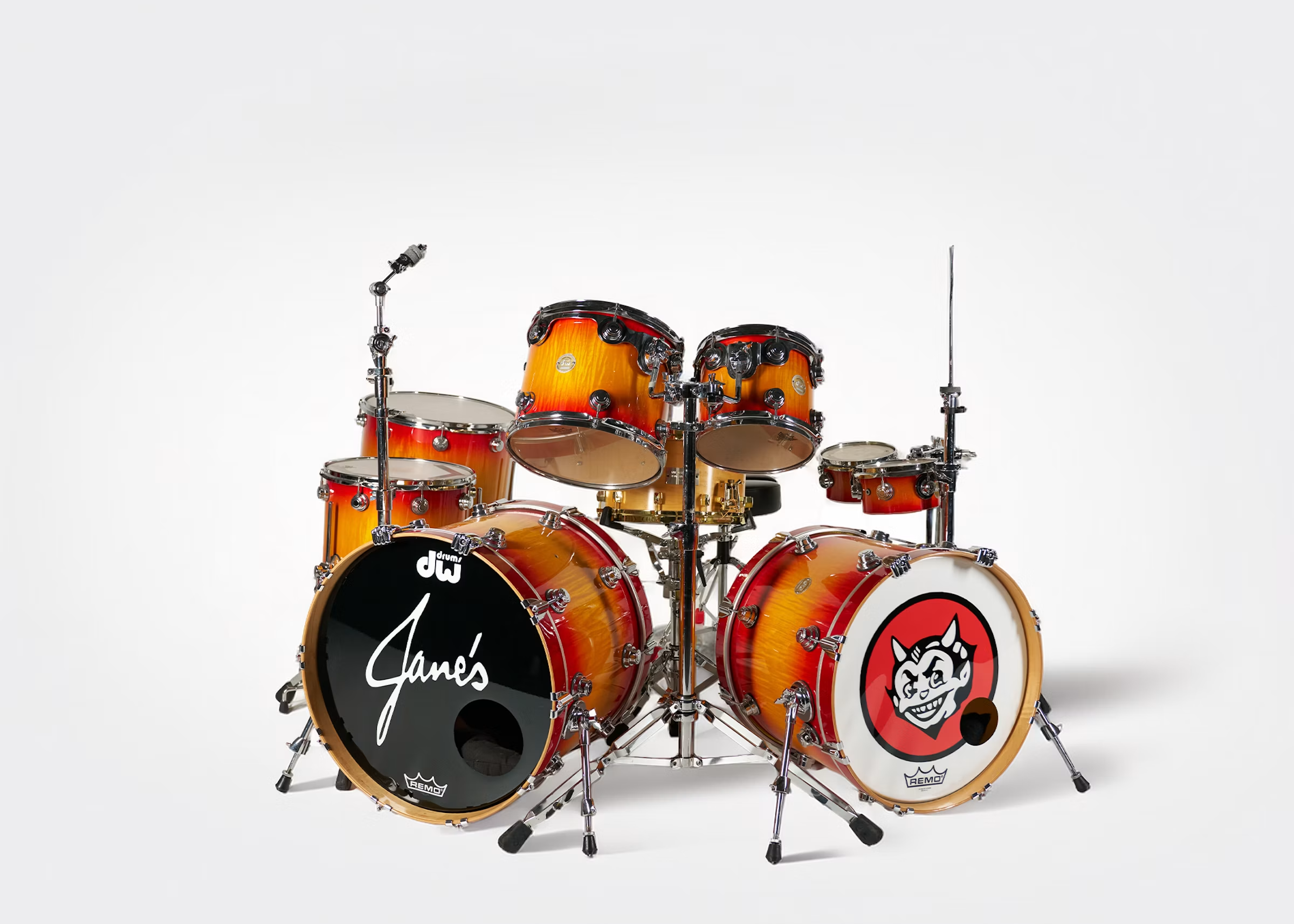
When Stephen Perkins formed The Panic Channel, he wanted to step away from the fast-moving, tom-heavy language of Jane’s Addiction and Porno for Pyros. His answer was a massive custom DW kit inspired by Jimmy Page, John Bonham, and the physical power of 1970s rock.
There are drum kits designed for speed and articulation, and then there are drums that make you want to hit them as hard as you can. When Stephen Perkins began working on the music that would become The Panic Channel, he found himself moving decisively toward the latter.
After years of developing highly percussive setups for Porno for Pyros and exploring fast-moving, tom-driven ideas with Jane’s Addiction, Perkins wanted something different. He wanted big drums, big backbeats, and the physical weight he associated with classic rock, so when Perkins walked into John Good’s office at DW, he came with a clear musical direction. “I wanna go back a little bit to classic rock,” he remembers telling him. Advertisement
The drum kit that emerged from that conversation would become one of the most visually striking and physically imposing instruments in Perkins’ collection. More importantly, it would push him toward a different way of playing.
A Different Kind of Band
The Panic Channel brought Perkins together with Dave Navarro, Chris Chaney, and vocalist/guitarist Steve Isaacs. Although several of those musical relationships were already familiar, Perkins wasn’t interested in simply continuing what he had done before. The musical objective was different. Perkins remembers being drawn to Isaacs’ songwriting and to the idea of making melodic rock songs that could be direct and digestible rather than constantly expanding into long musical journeys.
Some songs could certainly move into extended territory, but that wasn’t the foundation of the band. Perkins liked the idea that a strong rock song could make its statement in roughly three minutes without requiring a long solo or an extended jam, that idea changed what he wanted from his drums. As he had done throughout his relationship with John Good, Perkins translated the musical concept into the physical design of the instrument. Advertisement
This time, subtlety wasn’t the objective. Perkins wanted an instrument that could deliver punch, volume, and the unmistakable physical sensation of a large rock drum set.
“These Are Just Cannons”
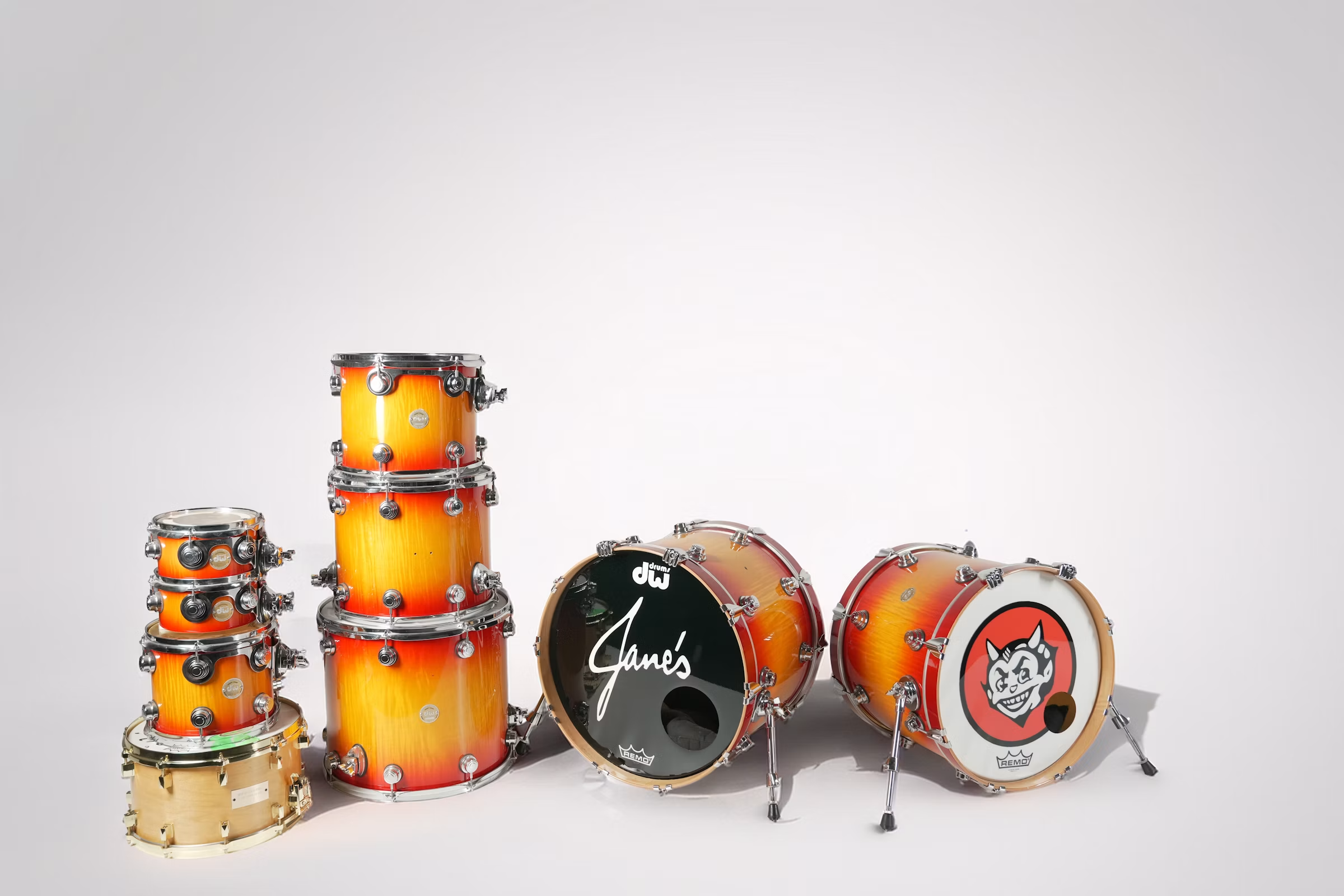
The 2006 maple DW kit Perkins commissioned for The Panic Channel was enormous. Its configuration included deep 10″, 13″, 15″, and 18″ drums, along with two shallow, single-headed 10″ drums designed to provide a timbale-like voice.
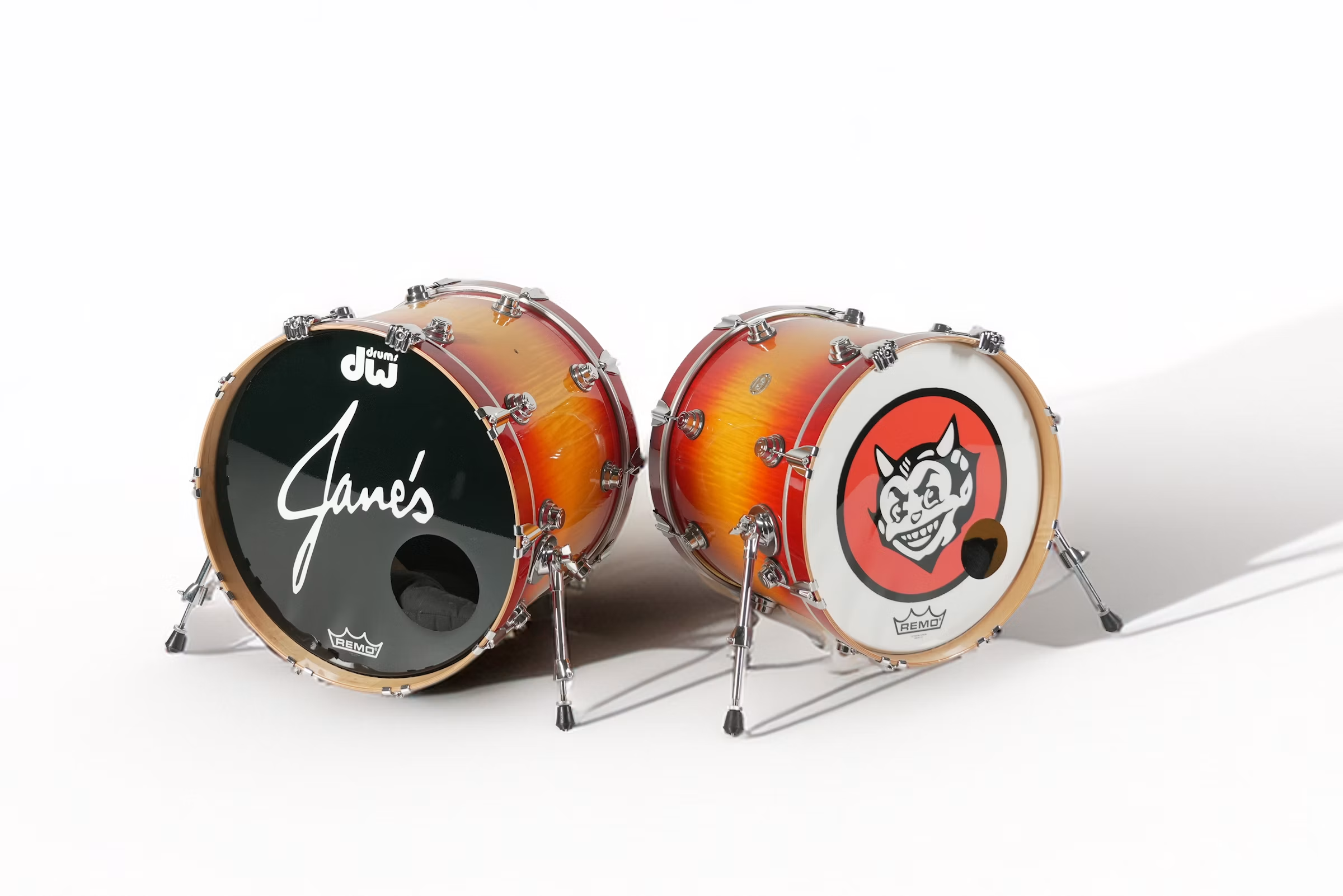
At the bottom were two different bass drums, measuring 20″ and 22″. Looking back at the setup, Perkins offers a particularly concise description: “These are just cannons.”
Size, however, was only part of the equation. Perkins and Good built the drums with very thin shells and no reinforcement hoops, pushing the instrument toward the kind of response Perkins associated with classic 1970s rock.
The result was an instrument designed to feel as substantial as it sounded. It was loud and powerful, but it was still intended to be musical and responsive to the songs being created around it.
Then there was the appearance of the kit. Perkins had a very specific visual reference in mind, and it came not from another drum set but from one of rock’s most recognizable guitar aesthetics.
Inspired by a Jimmy Page Les Paul
Perkins told Good he wanted the drums to evoke the orange sunburst appearance of a Jimmy Page Les Paul. The visual reference perfectly complemented what he wanted the instrument to accomplish musically. “The feel of it is loud and muscular,” Perkins explains. “The look of it is Bonham and Zeppelin and, you know, sunburst guitar.” Advertisement
Everything about the instrument pointed in the same direction. The large dimensions, thin shells, punch, volume, and sunburst aesthetic all reflected the world of classic hard rock that Perkins wanted to revisit.
The musicians occupying his imagination were equally important. John Bonham, Cozy Powell, Alex Van Halen, Tommy Lee, and Tommy Aldridge represented a different kind of physical relationship with the drum set.
Years later, when Perkins summarized what made the Jimmy Page-inspired kit special, he returned to those influences. He explained that he needed the feeling of those bigger drums (and the way players such as Powell and Van Halen approached them) to get back into his bloodstream. Advertisement
Getting Back to the Backbeat
That meant intentionally moving away from some of the characteristics listeners might immediately associate with Perkins. His playing with Jane’s Addiction could be busy, tribal, and filled with tom movement, while Porno for Pyros had pushed him toward an even broader percussion vocabulary.
The Panic Channel called for something else. Perkins wanted a big backbeat with powerful drum fills arriving at the end of the bar, creating more space and placing greater emphasis on the physical impact of each note.
“This is big backbeat with drum fills at the end of the bar,” Perkins explains. It was, in his own description, very different from the faster-moving approach he had explored with Jane’s Addiction and Porno for Pyros. Advertisement
The larger drums helped put him into that mindset. Rather than simply increasing the volume of his existing vocabulary, the instrument encouraged a different vocabulary altogether.
A Drum Kit as a Songwriting Tool
Perkins doesn’t describe the Jimmy Page kit simply as equipment used to perform songs after they were written. He describes the opportunity to build and use an instrument like this as part of the songwriting process itself.
“When you play a drum set, especially of that size and that volume, you play differently,” he explains. The physical dimensions and response of the instrument influence the ideas that come out of the drummer sitting behind it.
Perkins illustrates the idea by comparing different kinds of setups. Smaller drums such as 8″, 10″, 12″, and 14″ toms might lead his mind toward players such as Dave Weckl or Vinnie Colaiuta, while larger drums could move him toward what he calls the “Bonham world” or the power associated with Tommy Aldridge. Advertisement
That distinction gets to the heart of Perkins’ approach to custom drum design. The bigger drums didn’t simply make his existing ideas louder; they suggested different ideas and encouraged him to occupy a different musical space. For The Panic Channel, that was precisely what he wanted.
From Rehearsal Straight Into the Studio
The connection between this particular instrument and The Panic Channel recording is especially direct. Perkins says the kit was essentially brand-new when the band began using it.
He received the drums, rehearsed the songs with The Panic Channel, and then took the instrument into the studio. Perkins remembers the recording as being heavily rooted in the band’s live performance, with relatively few overdubs from the other musicians.
That means the drums heard on the recording capture an instrument that Perkins was still discovering while the band’s own musical identity was taking shape. The kit wasn’t a later addition to an established sound; it was there as that sound was being created. Advertisement
Its role didn’t end with the recording sessions. Perkins says the drums were used on The Panic Channel recording and throughout all of the band’s touring, and he later brought the kit to numerous sessions whenever he needed the punch and volume it provided.
For rock sessions in particular, it became a natural choice. The characteristics that had been deliberately built into the kit for The Panic Channel made it useful whenever Perkins wanted that same muscular response.
Returning to the ’70s Without Living in the Past
Perkins’ return to classic-rock thinking wasn’t simply an exercise in nostalgia. He wasn’t trying to reproduce another drummer’s sound or turn himself into John Bonham, Cozy Powell, or Alex Van Halen. Advertisement
Instead, he was using the physical vocabulary associated with those players (large drums, powerful backbeats, volume, punch, and space) to unlock another part of his own playing. It was the same philosophy seen throughout his collection, but applied to an entirely different musical objective.
“The special sauce for the Jimmy Page kit was me going back to my ’70s hard rock roots,” Perkins explains. He specifically connects that return to players such as Tommy Aldridge, Cozy Powell, and Alex Van Halen, and to the experience of hitting bigger drums with greater physical force.
That makes the kit more than an homage to the 1970s. It represents Perkins deliberately reaching backward to find something he could use moving forward.
From Stage Power to Something Personal
There is another massive rock kit in Perkins’ collection, but its story is considerably more private. The 2011 Black Gunmetal kit wasn’t primarily defined by a particular band, album, or tour; it was defined by the years it spent in Perkins’ home studio. Advertisement
Perkins played the kit alone again and again. He describes it as one of his favorite drum sets and admits that it is one of the more difficult instruments in the collection for him to let go.
The construction combined maple and mahogany, with mahogany inside the shells and maple forming the shells themselves. Its enormous configuration included two 20″ bass drums, two rata toms, 8″, 10″, 12″, 14″, and 16″ drums, a 20″ floor tom without a bottom head, and a 12″ wooden timbale.
Perkins describes the Gunmetal Sparkle finish as one of one, while the black rims represented another departure from his usual aesthetic. By number of drums and available sizes, he calls it the biggest drum set in the collection.
Its personality is equally unmistakable. Perkins calls it a rock-and-roll drum set and jokes that sitting behind it immediately makes him want to start playing Pantera riffs.
The Kit That Stayed Home
For all of its size, the Gunmetal kit’s most meaningful history isn’t about where it traveled. Its importance comes largely from where it stayed.
Perkins says the kit toured a little, but for the most part it remained in his home studio for years. Spending so much time alone with a single instrument created a particularly personal relationship between drummer and drums. Advertisement
“So much time alone with a drum set, that’s a romance,” Perkins says. He compares the difficulty of letting it go to the emotional attachment someone might have to the first car they ever drove.
That makes the Gunmetal kit an interesting counterpart to the Jimmy Page kit. One was created to give a new band the muscular voice Perkins wanted and quickly went into recording, touring, and rock sessions, while the other became the instrument waiting for him at home.
Both are enormous, and both draw Perkins toward heavier playing. Yet the histories attached to them could hardly be more different.
Big, Loud and Muscular
Stephen Perkins’ collection repeatedly demonstrates that changing drums was never merely cosmetic. Changing the instrument could change his relationship with the music and, ultimately, the ideas he played. Advertisement
The Porno for Pyros kit helped him develop a new percussion-oriented vocabulary, while the 1997 Short Stack kit gave him the articulation he wanted when Jane’s Addiction returned with Flea. Other instruments allowed Perkins to explore hybrids, different woods, different dimensions, and entirely different textures.
When he wanted to reconnect with the physical force of the rock drummers who had inspired him, however, the solution was very different. He and John Good created an instrument built around thin shells, deep toms, large bass drums, a Jimmy Page-inspired sunburst, and enough volume to alter the way Perkins approached a song.
The result was exactly what Perkins had been looking for. In his own description, the instrument felt “loud and muscular,” and that physical response helped him rediscover a side of his playing rooted in the power of classic rock. It wasn’t about recreating the past. It was about using the past to find another way forward. Advertisement
From Stephen Perkins’ Personal Drum Archive
Stephen Perkins’ 1997 DW Champagne Sparkle Short Stack kit, created for Jane’s Addiction’s Relapse Tour, is part of the Stephen Perkins personal drum archive being offered through the special ArtistFirst auction on September 10 at ANALOGr.com. A portion of the auction proceeds will support the Watts Conservatory of Music. Modern Drummer is continuing to explore the stories behind selected instruments from Perkins’ collection leading up to the auction.
