

The Rebirth of Jane’s Addiction: Stephen Perkins’ 1997 Relapse Tour Kit
 On 05th Sep 2026
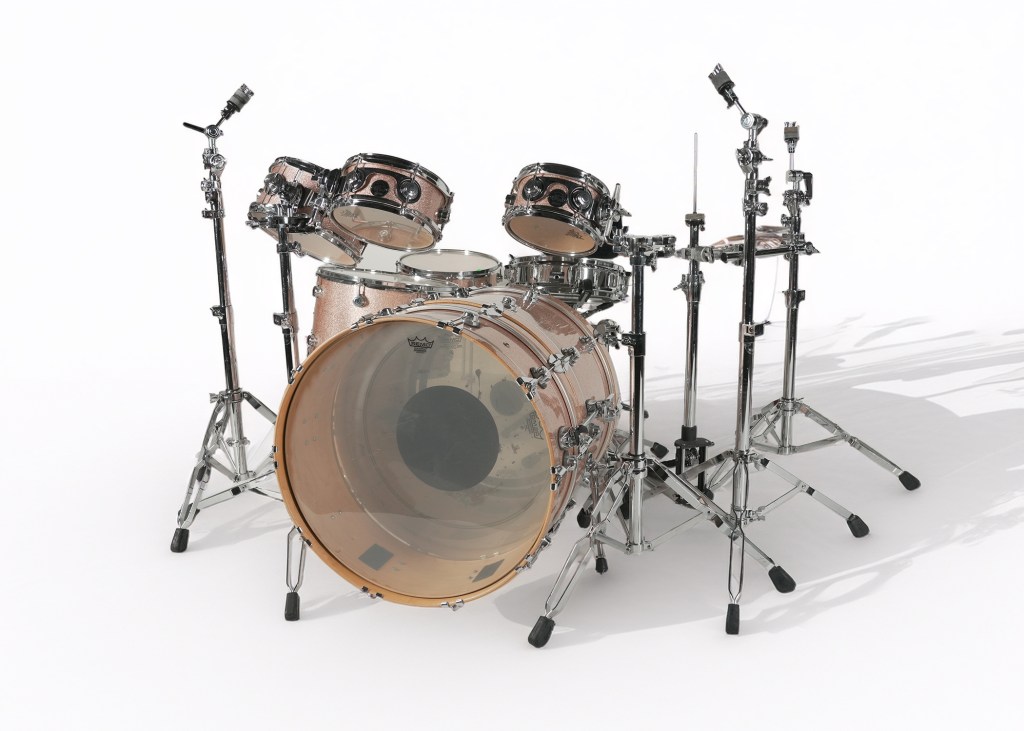
Six years after Jane’s Addiction broke apart, Stephen Perkins returned to the band’s music with Flea on bass, a new rhythm-section chemistry to build, and a radically different DW Short Stack kit designed for speed, articulation, and clarity.
In 1997, Jane’s Addiction was preparing to do something it hadn’t done in years, play together again. The band had broken up in 1991. Now, six years later, the Relapse Tour would bring Jane’s Addiction back to the stage—with Flea stepping in on bass.
For Stephen Perkins, returning to those songs wasn’t simply a matter of remembering the parts, the rhythm section itself had changed. Before the full band came together, Perkins and Flea spent roughly a month working together on their own. Flea was adapting his approach to music originally played by Eric Avery, including working with a pick, which Perkins notes was central to how many of Jane’s Addiction’s bass parts had originally been written and performed. Advertisement
The goal was not simply to recreate the past, they had to find out what Jane’s Addiction sounded like now and once again, Perkins decided that the instrument underneath him needed to change with the music.
Building a New Rhythm Section
Perkins and Flea began with the foundation. “What happened at that moment was Flea and I got together for a month without Navarro,” Perkins recalls. “And we just worked on the rhythm section.”
There was plenty to rediscover, Perkins hadn’t played the Jane’s Addiction catalog since 1991, while Flea was stepping into music built around another bassist’s sound and vocabulary. Later, Perkins, Flea and Dave Navarro continued working together for another month or two before moving into rehearsals with the entire band. Advertisement
“We just wanted to get the music right,” Perkins says. “It was years since we played, and now we have a new bass player.” While that new rhythm section was taking shape, another new idea arrived, John Good had something for Perkins to try.
The Short Stack
DW was developing what Perkins remembers as a brand-new concept at the time: the Short Stack. Very shallow drums, very fast drums. “You’ve seen short stacks since then,” Perkins says, “but this was the first year they came out. This was like a brand-new idea.”
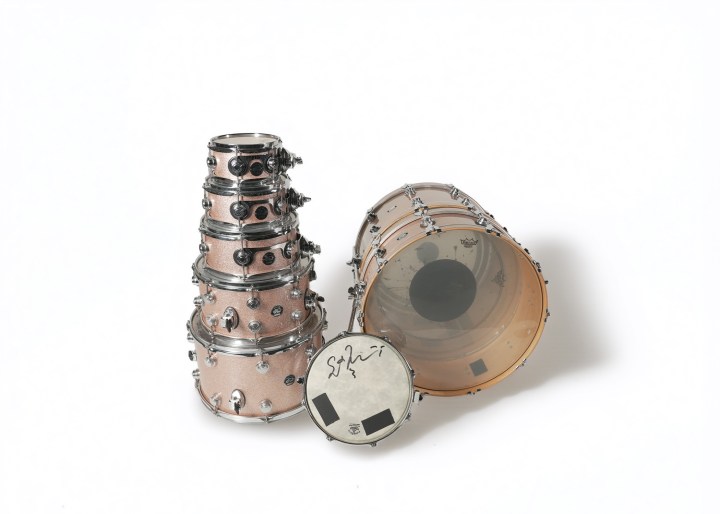
The configuration Perkins chose included shallow 8″, 10″ and 12″ toms, along with 15″ and 18″ shallow floor toms, underneath them sat the opposite extreme: a 24-inch bass drum with a woofer, the contrast was intentional, the shallow toms responded and disappeared quickly. Perkins compares the sensation to playing Roto Toms—the articulation happens immediately, without the notes lingering and crowding the space around them. Advertisement
The 24″ kick, meanwhile, provided an enormous low-end foundation. “Kind of an opposite of how shallow the toms were was how deep the kick drum was,” Perkins says, there was also a practical advantage, because the toms were so shallow, Perkins could position them comfortably over a large 24″ bass drum without the kick forcing the toms too high or creating awkward angles. The result was a kit that felt compact and fast on top while still moving serious air underneath.
A Kit That Brought Something Back
Then something interesting happened. The speed of the drums began changing what Perkins played, their articulation reminded him of practicing clean single-stroke rolls as a young drummer and listening to players such as Terry Bozzio and Billy Cobham. “And those toms kind of brought that out of me,” he says. That quality was particularly important for Jane’s Addiction, Perkins describes the band’s drum vocabulary as containing “very busy tribal tom work.”
For that music, he wanted two things: Articulation. Clarity.
And with Flea now occupying the bass frequencies differently than Eric Avery had, Perkins knew the reunited band would inevitably have a different sound. “Flea is… His tone is very different than Eric Avery, who wrote the songs,” Perkins explains. “So there was a new sound gonna happen with the band anyways.” The drums had to respond to that change. Advertisement
Making Room for Flea
This is where the design becomes more than a collection of interesting drum sizes, Perkins was thinking about space. The short toms had a quick, almost glassy quality. Rather than occupying a large portion of the sonic spectrum, Perkins describes them as appearing and disappearing rapidly. “They just kind of, like, zip by like a bird flying by your vision.” At the bottom of the kit, the 24″ kick and woofer supplied the opposite, low end, a lot of it.
Perkins describes the bass drum as moving so much air that it left a powerful low-end foundation alongside Flea’s bass. This was not an attempt to make his old drum sound louder, it was a redesign around a new musical relationship.
Choosing the Notes
Even within the unusual floor-tom configuration, Perkins and Good were thinking melodically. Perkins had traditionally used combinations such as 14″/16″ or 16″/18″, for this kit, he went with 15″ and 18″ floor toms, that three-inch interval was new to him. “It was cool to have the three-inch difference,” he says. “That’s really the notes.” And those notes weren’t accidental. “Speaking with John Good, we picked the notes.” Advertisement
Even though the drums were shallow, Perkins and Good still wanted them to produce the specific pitches and musical response he needed, it is another example of the philosophy that runs throughout Perkins’ collection: the kit was not selected independently of the music, it was built around what the music required.
Champagne Sparkle
The wrap itself wasn’t exclusive to Perkins—it was available from DW at the time—but he loved its connection to older drum kits and the visual language of the swing era. “I tip my hat to the old days of, like, swing,” he says. But what was underneath that Champagne Sparkle finish was something very different, Perkins compares the kit to a race car. After years with the expansive Porno for Pyros setup—with timpani, bongos, congas, timbales and a much broader percussion environment—the Short Stack represented an abrupt shift.
Everything was cut down, fast, responsive. The large kick and woofer supplied the weight while the shallow drums moved almost instantaneously, the finish nodded to the past, the instrument was built for what came next. Advertisement
The Rebirth of Jane’s Addiction
For Perkins, the significance of this drum set ultimately goes beyond its specifications. It was the instrument waiting for him when he returned to Jane’s Addiction. “So that drum set was kind of my reintroduction to Jane’s Addiction music,” Perkins says, “because we hadn’t played it since ’91.” Then he puts it even more directly: “That was the rebirth of Jane’s Addiction drum set.”
That rebirth is documented. The kit appears in 3 Days, the film chronicling the Relapse Tour with Flea on bass. Perkins says the tour performances were filmed extensively, although only part of that performance material ultimately appeared in the released film. There is another documented moment where fans can see it. On October 31, 1997, Jane’s Addiction performed an MTV concert in New York City, that is the kit behind Stephen Perkins.
A Different Jane’s Addiction
The story of the 1997 kit is therefore not simply the story of a reunion, it is about what happens when musicians return to familiar music after enough time has passed that neither the players nor the circumstances are exactly the same, Jane’s Addiction hadn’t played together since 1991, Flea was now on bass, Perkins had spent the intervening years developing a completely different percussive vocabulary with Porno for Pyros, and DW was giving him access to a new drum concept that hadn’t existed when Jane’s Addiction originally broke apart. Advertisement
Instead of trying to erase those changes, Perkins built around them. A faster drum, a clearer voice, a massive low end, a new rhythm section, and a kit designed not simply to reproduce Jane’s Addiction’s past, but to help Stephen Perkins find his way back into its music.
Years later, when asked to identify the most significant instruments in the collection, Perkins immediately points to this one: “We have the kit that I had when Flea joined Jane’s Addiction, which had to rebirth the Jane’s Addiction ideas into my drum style.”
From Stephen Perkins’ Personal Drum Archive
Stephen Perkins’ 1997 DW Champagne Sparkle Short Stack kit, created for Jane’s Addiction’s Relapse Tour, is part of the Stephen Perkins personal drum archive being offered through the special ArtistFirst auction on September 10 at ANALOGr.com. A portion of the auction proceeds will support the Watts Conservatory of Music. Modern Drummer is continuing to explore the stories behind selected instruments from Perkins’ collection leading up to the auction. Advertisement
